

A Personalized Approach to Cancer Treatment
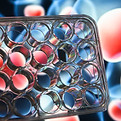
Patient-Derived Organoid (PDO) Drug Screening is a 3D cell-based technology used to identify the most effective cancer therapies for individual patients. By collecting a small sample of tumour tissue, the patient’s tumour cells are cultivated in the laboratory to form three-dimensional organoids often referred to as “tumour-in-a-dish.” These organoids closely replicate the original tumour’s structure, genetics, and behaviour.
Once established, the organoids are exposed to a range of cancer therapies in the laboratory, providing valuable insights into how the patient’s tumour may respond to different treatments. This data supports oncologists in making more informed, personalised treatment decisions enhancing precision and potentially improving clinical outcomes.
Key Features
PDO Drug Screening represents a shift toward precision medicine where treatment is guided not just by diagnosis, but by the biology of each individual’s cancer.

Patient-Specific Modelling
Organoids retain the unique characteristics of the patient’s tumour, including mutations and drug resistance.
Predictive Drug Response
Screening results often reflect how the patient may respond to treatment in clinical settings.

Timely Insights
Drug testing is typically completed within two to three weeks after sample collection.
How does it work?

A portion of tissue is removed from the tumour during surgery or routine biopsy.

Your cancer cells are grown in the laboratory and treated with various cancer drugs.

The response of your cancer cells to the drugs is measured.

A report is sent to your oncologist detailing these results.

Your oncologist decides the best course of treatment for you based on these results.


PDO Drug Screening
can help you get the unique treatment you deserve,
and this could make all the difference.
---------- -----------
Talk to your oncologist to find out if your cancer is suitable for
PDO Drug Screening
---------- -----------
"
"
Patient - Frequently Asked Questions
🧬 What Is the PDO Drug Screening Test? The PDO Drug Screening Test is a laboratory-based method that helps personalise cancer treatment. A small sample of your tumour are collected during surgery or a routine biopsy is used to grow three-dimensional cell structures called Patient-Derived Organoids (PDOs). These organoids mimic the behaviour and biology of your original tumour. Once developed, your PDOs are exposed to a selection of cancer drugs typically those recommended by your physician. The response of the organoids is observed under laboratory conditions, and the findings are compiled into a detailed report to support your doctor in making informed treatment decisions. ⚠️ Please note: The drug response observed in PDOs may not always reflect how your body will respond to treatment, due to additional physiological factors.
💡 How Will This Test Help Me? This test provides insight into how your tumour cells respond to various cancer therapies in a controlled lab setting. The results can help your physician better understand your tumour’s drug sensitivity and resistance profile, offering additional guidance when planning your treatment.
🎯 Is This Test Appropriate for Me? PDO Drug Screening has been successfully applied to several cancer types, including breast, ovarian, lung, colorectal, pancreatic, gastric, and head & neck cancers (Asia only). It is particularly useful for patients preparing to undergo chemotherapy, and for those with relapsed disease who did not respond to first-line treatments. Testing for additional cancer types, such as prostate cancer, is currently under development.
🔬 How Reliable Is This Test? The technology behind this test was developed at a leading research institution specialising in functional genomics and integrative biology. It has been published in peer-reviewed scientific publications, including journals such as Nature Communications and Nature Medicine.
⏱️ When Can I Expect My Test Results? Once your sample is received and successfully processed, results are typically available within two to three weeks and will be sent directly to your physician. ⚠️ In some cases, testing may not be possible due to sample-related issues such as contamination, low cell count, or poor viability.
🗣️ If I Want to Get This Test, Who Should I Speak To? Please consult your treating physician. They can advise whether this test is appropriate for your condition and help coordinate the sample collection process. ⚠️ This test is not a substitute for medical care. The results should always be interpreted by your physician in the context of your overall health and treatment plan.
🧪 Where Is the Test Performed? All PDO Drug Screening tests are conducted in a certified laboratory located in Singapore.
📄 Disclaimer While PDO Drug Screening provides valuable biological insights, it is not guaranteed that a tumour model can be successfully developed from every sample. Factors such as contamination, low cell viability, or insufficient tissue may prevent completion of the test. Additionally, drug responses observed in vitro may not fully reflect how a patient’s body will respond to treatment. All results should be reviewed in consultation with your physician and should not be used alone to determine or adjust your treatment plan.
Physician - Frequently Asked Questions
📚 Background Cancer therapies are often selected based on clinical studies involving broad patient populations. If the initial treatment fails, oncologists typically move to the next best option. While each patient’s cancer is biologically unique, treatment pathways are often standardized. Recent advances in three-dimensional organoid technology now offer a way to personalise therapy more effectively by modelling the patient’s tumour response in vitro.
🧬 What Is the PDO Drug Screening Test? The PDO Drug Screening Test is a precision-guided laboratory method that helps personalise cancer treatment. It creates a predictive in vitro model using Patient-Derived Organoids (PDOs) 3D structures grown from the patient’s tumour tissue that replicate the tumour’s biology and drug response. Once established, PDOs are exposed to standard-of-care chemotherapeutic agents (as recommended by the physician), and their response is analysed under controlled laboratory conditions. The results are compiled into a detailed report to support clinical decision-making.
🧪 How Is the PDO Drug Screening Test Performed? A portion of the patient’s solid tumour is typically 2–3 core biopsies is mechanically and enzymatically disaggregated, then cultured in multi-well plates to form organoids. 💊 Organoids are treated with chemotherapeutic agents at Cmax, the maximum serum concentration based on published literature. ⏳ After 72–96 hours of drug exposure, biochemical assays are performed to assess cell viability compared to untreated controls. 📄 The resulting report outlines the drug response profile of the PDOs, offering insights that may assist oncologists in tailoring treatment.
🧠 What Are the Clinical Advantages? The PDO Drug Screening Test offers three key benefits: ⚡ Fast Turnaround: Results are typically available within three weeks, supporting timely treatment planning. 🧰 Comprehensive: A broad panel of standard-of-care chemotherapeutics can be tested for a full-spectrum view of potential options. 🎯 Actionable: The report may help identify therapies with higher likelihood of effectiveness based on the patient’s tumour biology.
🧬 How Does the PDO Platform Differ from Genomic Testing? Next-Generation Sequencing (NGS) identifies genomic alterations that may be linked to targeted therapies. However, NGS relies on population-level associations and does not directly measure drug response. In contrast, the PDO Platform provides a functional, real-time model of the patient’s tumour response to chemotherapy and targeted agents offering a biologically relevant complement to genomic data.
👥 Which Patients Are Most Appropriate for Testing? This test is intended for patients undergoing chemotherapy, especially those with advanced or relapsed cancers who have not responded to first-line therapy. In such cases, oncologists often have more flexibility in drug selection, and timely, biologically informed data becomes critical. PDO testing has been successfully applied to breast, ovarian, lung, colorectal, pancreatic, gastric, and head & neck cancers (Asia only). Additional cancer types, including prostate, are currently under development.
📊 What Will the PDO Report Indicate? The report provides: A summary of how the patient’s tumour cells responded to a panel of standard-of-care chemotherapeutics under laboratory conditions. Each report is designed to be clear, clinically relevant, and supportive of treatment planning by the ordering physician.
⏱️ When Can I Expect My Patient’s Test Results? Once the sample is received and successfully processed, results are typically available within 2–3 weeks.
🧫 What Tumour Sample Types Can Be Used? Fresh tumour tissue from surgery or biopsy is required. Samples must be transported in chilled media and delivered to the laboratory within 24 hours. Formalin-fixed paraffin-embedded (FFPE) tissue is not suitable for this test.
📦 What Sample Size Is Required? A minimum of 1cm³ of tumour tissue or 2–3 core needle biopsies is recommended. Smaller samples may compromise the success of organoid development and testing.
🧪 Where Is the Testing Performed? All testing is conducted in a certified, accredited laboratory located in Singapore.
📄 Disclaimer While PDO Drug Screening provides valuable biological insights, it is not guaranteed that a tumour model can be successfully developed from every sample. Factors such as contamination, low cell viability, or insufficient tissue may prevent completion of the test. Additionally, drug responses observed in vitro may not fully reflect how a patient’s body will respond to treatment. All results should be reviewed in consultation with your physician and should not be used alone to determine or adjust your treatment plan.
